Critical systems run on C++. We help those systems evolve in public: maintaining and growing Boost, advancing proposals and implementations through WG21, and supporting the compiler front ends – Clang, GCC, and EDG. Our job is to get safer, modern C++ into the hands of developers.






From the C++ Alliance
Jorem ipsum dolor sit amet, consectetur adipiscing elit. Nunc vulputate libero et velit interdum, ac aliquet odio mattis.
The Language Belongs to the People Who Write It
C++ is a working language. It runs the engines and the pipelines and the quiet infrastructure underneath almost everything people depend on, usually without anyone noticing it is there. And for forty years it has grown from the people who use it. Someone hits a wall, builds the thing that gets them
Read more →

The C++ Alliance is ensuring that C++ remains vibrant, accessible, and invaluable for generations to come
As a 501(c)(3) nonprofit, we support the libraries, tools, and infrastructure millions of developers rely on daily, and create pathways for emerging developers to contribute to open-source projects that matter.

The State of C++
Global Usage & Growth
C++ powers the world's most demanding applications: operating systems, game engines, trading platforms, embedded devices. The global developer population has reached 16.3 million, up 73% from 9.4 million over the past 4 years.
16.3M
Total Developers population
9.4M
Community growth in the last 4 years.
The Challenges We Face
Standards Participation
The ISO C++ Standards Committee (WG21) shapes the language's future, but meaningful participation demands resources many contributors can't afford. Without diverse voices at the table, the language risks disconnection from the developers who use it.
Accessibility
C++ has evolved dramatically through modern standards (C++17, C++20, C++23), but educational resources haven't kept pace.
Safety
As security scrutiny intensifies, C++ must demonstrate that performance and safety aren't mutually exclusive, requiring sustained investment in safer patterns and better tooling.
Our Philosophy
We fund excellence, build community, shape the future of the language, and open doors for the next generation.
Build with Building Blocks
A well-designed library encapsulates functionality and executes it well. Assemble excellent libraries, and developers can create sophisticated applications with minimal redundant effort.

Build for the Future.
C++ must embrace building software from proven components. This is why we support Boost: the premier collection of composable C++ libraries, where libraries build upon each other through sound engineering principles.

The C++ Alliance is a 501(c)(3) public nonprofit founded in 2018 that advances the C++ ecosystem through Boost libraries and open-source infrastructure. We employ 25 full-time staff, serve as fiscal sponsor for Boost (since September 2024), and actively participate in WG21.
Meet our staff

Make C++ accessible, safe, and powerful for everyone — from students discovering computer architecture to engineers building the critical infrastructure our world depends on.
Boost C++ Libraries
We serve as fiscal sponsor and primary supporter, with staff engineers maintaining core libraries and improving infrastructure.
Boost Software License
A simple, permissive license designed for C++ libraries, trusted by major corporations for its clarity and compatibility.
wg21.org
An unofficial WG21 mailing browser: the public papers the committee publishes, repackaged with search, filters, abstracts, and GitHub cross-links so developers can follow standardization work more easily.

Mr. Docs.
A modern documentation generator built on Clang/LLVM that natively understands modern C++ features. Available at mrdocs.com.

Compiler Development
Our engineers contribute directly to Clang/LLVM, ensuring compilers properly support modern language features.
Worem ipsum dolor sit amet, consectetur adipiscing elit. Nunc vulputate libero et velit interdum, ac aliquet odio mattis.

Boost 2.0.
A strategic evolution addressing technical debt and modernizing build systems while preserving Boost's renowned quality.

Localization
Chinese documentation translations to serve the rapidly growing developer community in China.
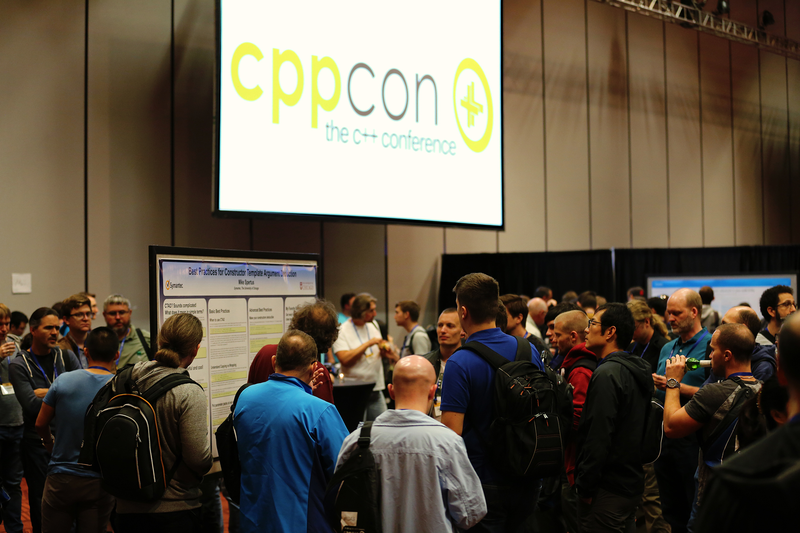

Compiler Internship Program.
Hands-on opportunities working alongside our Clang/LLVM contributors.

Boost Documentary.
A feature-length film from a Netflix-credited producer exploring Boost's history intertwined with the C++ Standards Committee.
Common questions
Jorem ipsum dolor sit amet, consectetur adipiscing elit. Nunc vulputate libero et velit interdum, ac aliquet odio mattis.
Given the existence of Standard C++ Foundation and Software Freedom Conservancy, why was it necessary to form The C++ Alliance as a new, separate legal entity?
While the missions of Standard C++ Foundation and The C++ Alliance are similar and overlapping, they have different status under tax law. The Foundation is organized as a 501(c)(6) organization, a trade group. In addition to providing legal protection for companies to work together in ways that might otherwise be viewed as industrial "collusion," a trade group can accept tax-deductible dues from member companies. The Alliance is organized as a 501(c)(3) organization, a charity which can accept tax deductible contributions from the general public.
Although the tax status of Software Freedom Conservancy and The C++ Alliance are similar, their missions and concerns are different. There is mission overlap. Conservancy, whose mission is to support the development of FLOSS libraries, supports the Boost Libraries project, which would also be within the mission of The Alliance, but The Alliance has both a narrower and a broader mission. While Conservancy is language agnostic and is focused on software development, The Alliance is focused exclusively on the C++ environment and is free to support non-FLOSS projects such as language proposals, books, education materials, tools, or other projects which may not be software or may have non-FLOSS licensing.
It is also the case that The C++ Alliance is not a good fit as a Conservancy project. It is appropriate for small non-proprietary projects to pool their resources to provide themselves with financial, legal, accounting, and other services for which they have a common need and for which they may, individually, be too small to economically procure. Although the Alliance will be promoting library development, it doesn't have the same requirements as a FLOSS software producer, so would need different services than your typical Conservancy project and has sufficient endowment to fund the services that it will require.